Movies

Direction
Production
Camera
Lighting
Art / Styling
Post Production
CG / Visual
Animation
Sound / Music
XR / Interactive
Artist
Technical / Engineering
Expo 2025: Wakayama One Hundred Views — “Blending, Connecting.” - 映像作家: YusukeMurakami
Audio visual performanceCodingEventExperienceGenerative ArtInstallation

Expo 2025: Wakayama One Hundred Views — “Blending, Connecting.”

2025
00:01:00
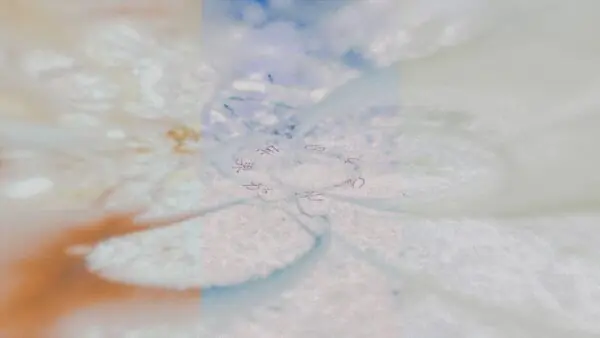
Description: Set against Wakayama’s profound history and magnificent natural scenery, this 30-minute audiovisual installation explores the theme of “mixing and binding” — the fusion of different religions and genres, as seen in shinbutsu-shūgō. It offers a visual and musical experience projected onto eight totems, each 4 meters high, evoking the towering ancient trees of Kishu, and reflects Wakayama’s “spirit of tolerance” found in places such as Koyasan, the Kumano Sanzan, and in the thought of Minakata Kumagusu. Drawing inspiration from the Kumano pilgrimage, the work portrays Wakayama’s character — its acceptance and coexistence beyond differences in religion, social status, nationality, and ideology — as a journey through future, past, present, and once again into the future. This journey is an experience of “rebirth,” a space where Japanese tradition and digital expression, the real and the virtual, the West and the East intersect, reflecting the spirit of shinbutsu-shūgō.
There, Minakata Kumagusu’s belief that “truth lies in between the two” comes alive. Drawing inspiration from the Kumano pilgrimage, the work portrays Wakayama’s character — its acceptance and coexistence beyond differences in religion, social status, nationality, and ideology — as a “journey of rebirth” through future, past, present, and once again into the future. Symbolic order of the Kumano pilgrimage and its blessings Kumano Hongu Taisha — Future Kumano Hayatama Taisha — Past Kumano Nachi Taisha — Present Kumano Hongu Taisha (Return) — Future / Rebirth The video installation is composed of these four parts. 01. FUTURE The opening moment where anticipation and spirituality intersect.
Through flickering light, pulses, and shifting colors, it depicts a world on the verge of creation. 02. PAST A journey into the origins of Wakayama.
Tracing the land’s deep memories through historical elements such as volcanic activity, nature, and mandala scrolls. 03. PRESENT A chapter that moves through the diverse landscapes that could be called the hundred views of Wakayama.

It captures the culture, daily life, and beauty alive in modern Wakayama. 04. FUTURE / RESURRECTION A dreamlike finale centered on the theme of “rebirth” leading into the future, using reverse-playback imagery.
As a symbol that transcends the boundaries of religion, gender, and nationality, totems appear and visually embody the “spirit of tolerance.” About the event movie The five great elements of esoteric Buddhism at Koyasan — fire, water, wind, void, and earth — are translated into visual expression,
making visible the flow by which they merge to form the universe.
It conveys the spiritual depth of Wakayama in a visual and sensory way. What does “Mixing, Binding.” mean? The word “musu,” found in Takamimusubi-no-Kami and Kamimusubi-no-Kami, two of the three creator deities in Japanese mythology,
means “to give birth” or “to produce,” and represents the power to generate new life and relationships.
As seen in words such as musuko and musume,
“musu” has long been a core concept in Japanese, meaning “generation” and “bonding.” Shimenawa and shide, seen at shrines and sacred sites, are symbols of “binding” that sanctify space and invite the gods. We chose this “musu (Musubu)” as the theme of this work because it is a word that symbolizes the spirit of Wakayama, which has passed down Japan’s oldest culture to the present day.
Komyaku’s Dancing Garden, Komyaku’s Farewell - 映像作家: hirai
3DCGCo-CreationGenerative ArtInstallationProjection mappingReal-time Graphics

Komyaku’s Dancing Garden, Komyaku’s Farewell

2025
00:01:41
This work is a video piece that was exhibited and screened as part of an ambient projection-mapping presentation at the EXPO Hall “Shine Hat” and the Popup Stage East Outside at Expo 2025 Osaka, Kansai. Taking as its motif the “EXPO 2025 Design System” IDs, affectionately known as “Komyaku” at Expo 2025 Osaka, Kansai, and with Kohta Hikichi, a representative member of the team that created it, serving as an advisor, we drew on the expertise in artificial-life ecological systems that HiRai has long been researching to create a real-time video simulation system and visuals. In producing the video, we referenced the design system’s history of being prototyped based on metaballs, and developed a real-time simulator in which the Komyaku behave as if they were alive while retaining the identity of the design itself. By using GPGPU to calculate the interactions among large numbers of Komyaku in real time, we built a system that can be flexibly expanded to support a wide range of possibilities, including interaction and the generation of one-of-a-kind videos. At the Popup Stage East Outside, we also took advantage of the architectural characteristics of a structure in which the projected image is interrupted by support columns, and created visuals that made it look as though each steel beam were packed full of Komyaku. We pursued video production that made the most of the characteristics of the projection surface. The name “Komyaku” naturally spread as a nickname referring to the IDs that make up the design system. Taking into account this derivative, fan-created cultural expansion, this work intentionally uses the term “Komyaku.”
Phantom Siita "Rose-Colored Moon" (OFFICIAL MUSIC VIDEO) - 映像作家: kazukigotanda
Music videoPaper craftStopmotion

Phantom Siita "Rose-Colored Moon" (OFFICIAL MUSIC VIDEO)

2026
00:03:45
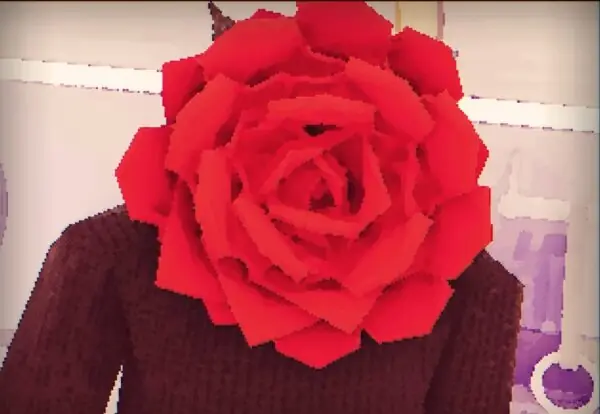
In this work, built around a new song by Phantom Siita, I sought to foreground the group’s aesthetic beauty and darkness while using Le Fanu’s vampire tale Carmilla as a motif, creating a world that unfolds like a Gothic short film. I had long thought that I wanted to make a vampire film at least once in my lifetime, and when I saw “Carmilla” written in a note from producer Ado, I was extremely excited. Among films based on Carmilla, Carl Theodor Dreyer’s Vampyr is one of my all-time favorites, and throughout this production I also kept thinking about the ashen, anemic pallor of Isabelle Adjani and Klaus Kinski in Werner Herzog’s Nosferatu, another vampire film. The setting is an old mansion that appears on a night of the full moon. Through the process of the girl Heine wandering into the mansion and getting swept up in the Phantom Siita’s—vampires’—festival, the film hints at an unnameable emotional wavering that cannot be clearly defined as romance, dependence, or illness. Visually, while drawing on European Gothic sensibilities and the decadent atmosphere of filmmakers such as Daniel Schmid, I aimed for a textured expression that combines live action and analog collage to depict “illness ≠ love.” That emotion is strictly not equal; here, I do not present it in an easy-to-understand way as “love is an illness.” By portraying, on the same plane, emotions that cannot be labeled—“I love you, I’m drawn to you, I want to hold on to you but I don’t want to, I want to run away, I want to live, I want to die, and I don’t want to die either”—alongside a body that grows weaker and more exhausted, I tried to express that this ungraspable feeling is real. As for the collage, rather than shooting against a green screen, we filmed in a studio filled with vintage props and similar items. Because the relationship between space and the people within it was necessary, and because collage needed to draw out that magnetic field in order to create a distortion of reality, I have lately tried to avoid using green screen as much as possible. By dismantling those elements, I wanted to portray a blurred consciousness and memory shaped by the dislocation of time and space. As for the collage method itself, we would print out live-action frames that had been shot and create animation while rearranging them, and even before shooting there were times when fragments of blurred consciousness, the mansion, or parts of scenes were assembled into analog collages.

Loading...

No more content

Error loading content

Loading...

No more content

Error loading content