カワイオカムラ

KAWAI+OKAMURA

Award
2023年 / 2020年
Category
Art Department
Profile
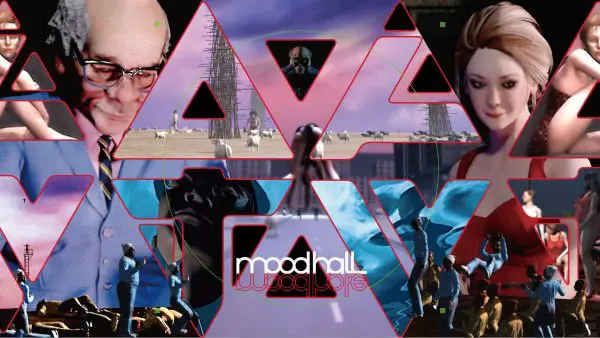
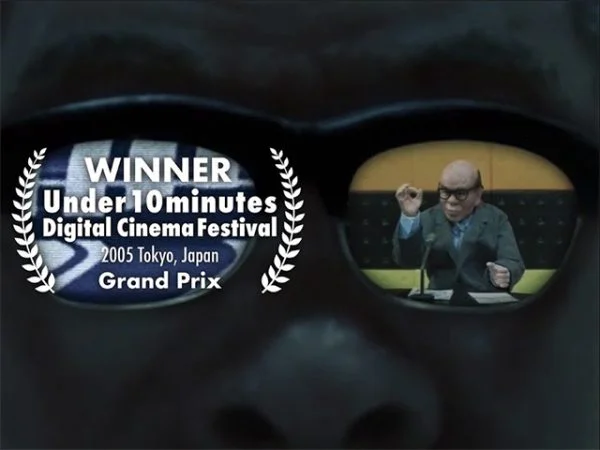
Kawaikamura was formed in 1993 by Takumi Kawai and Hiromi Okamura, both born in 1968. They began making videos with their solo exhibition “Over the Rainbow” (1997). Their video collages drew attention for combining Kawai’s craftsmanship, rooted in his background in sculpture, with Okamura’s intense pictorial expression from his studies in oil painting. In 1999, they held the solo exhibition “Square Genre” at Shijo Gallery in Kyoto. In addition to cel animation, they experimented with every kind of visual technique, including model animation, puppetry, live action, and documentary. Works such as “HOLY & CHEAP,” featuring the silhouette of a legendary manzai duo, and the head-butting-only wrestling piece “Headless” became independent short-form content; refined versions of these works, as well as new series, were broadcast on TV Tokyo’s “Vermilion Pleasure Night.” In 2002, “Headless 3001 Series” received the Special Jury Prize at the 13th Chofu Film Festival 2002 / 5th Short Film Competition. In 2005, “Heko Hyon 7” won the Grand Prize at the 1st Under 10 Minutes Digital Cinema Festival. Their production increasingly centered on a technique they call digital model animation. In 2007, “Fade out to murder,” presented in the exhibition Criterium 71 at the Art Tower Mito, was expanded with additional scenes and re-edited after the exhibition, and screened in competition at the 65th Locarno Film Festival as “Columbos” (2012). The following year, it won the Award for Best Animated Short Film in the International Short Film Competition at the 53rd Krakow Film Festival. It was also selected for the Computer Animation / FILM / VFX category at Ars Electronica 2014, and screened at film festivals around the world. In 2016, they held the solo exhibition “Mood Hall” at the Kyoto City University of Arts Gallery @KCUA. Alongside their earlier works, they unveiled a new installation of the same title, “Mood Hall,” creating an immersive fantasy space spread across the expansive floor, accompanied by music by Morihiko Hara. In 2019, the film Mood Hall was completed. It received the top prize in the Experimental Film section at the 14th Animatou International Animation Film Festival in Geneva, Switzerland. It was released in 2020 at Demachiza in Kyoto, alongside Columbos.
Biography
「ヘッドレス3001シリーズ」  [2001]
第13回調布映画祭ショートフィルムコンペティション|2002|特別賞

「ヘコヒョン7」 [2004]
第1回 アンダー10ミニッツデジタルシネマフェスティバル|2005|グランプリ

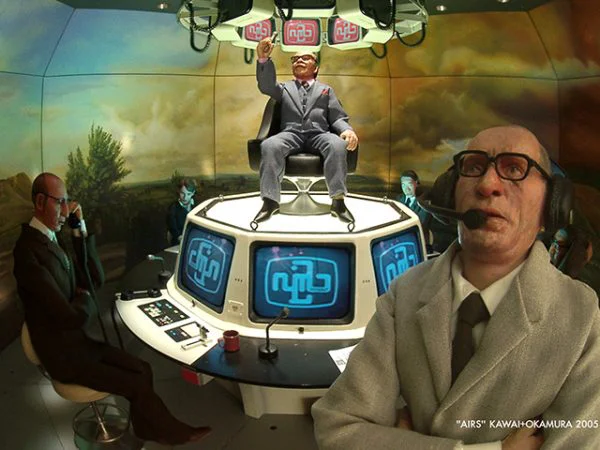
「ヘコヒョン7」+「AIRS」 [2005]
キリンアートプロジェクト2005|キリン賞

「コロンボス」 [2012]
第65回ロカルノ国際映画祭|2012|Pardi di domani: Corti d'artista部門出品
ロッテルダム国際映画祭2013|Spectrum Shorts部門出品
第53回クラクフ映画祭|2013|国際短編部門アニメーション最高賞
アルス・エレクトロニカ 2014|コンピューターアニメーション/FILM/VFX部門 Honoray Mention

「ムード・ホール」 [2019]
第14回アニマトウ国際アニメーション映画祭|2019|エクスペリメンタルフィルム部門最高賞
第49回モントリオールヌーヴォ映画祭|2020|Les Nouveaux Alchimistes部門ノミネート
第13回恵比寿映像祭|2021|特集上映、インスタレーション
The FILE – Electronic Language International Festival - ANIMA+|2022|公式出品
FU:BAR - GLITCH ART FESTIVAL - GLITCH ART EXHIBITION|2022||公式出品

Work

Mood Hall -side B- | Mood Hall [side B] - 映像作家: kawaiokamura
3DCGAnimationArt workExperimental filmOriginalShort film

Mood Hall -side B- | Mood Hall [side B]

2022
00:33:34
“33 minutes and 33 seconds needed before the world ends” A dying Earth. A strange game played by the survivors: “Mood Hall.” A mysterious middle-aged gentleman and a beautiful woman, appearing and disappearing. Little people. Giants. A party. A desert. The bottom of a pool. Dance. Day and night, repeated again and again. Experimental, artistic, adventurous, half sci-fi, half mystery: a densely layered labyrinthine world made of sketches. A masterpiece of film that strips away words and leads you into a world of seeing and hearing alone! ・・・・・・・・・・・・・・・・・・・・・・・・・・・・・・・・ In 2016, “Mood Hall” was presented as the latest installation in Kawaiokamura’s retrospective exhibition. It was Kawaiokamura’s first new work in nine years, with sound direction for the entire solo show handled by Mariko Harada. In 2019, “Mood Hall” was completed as a film work, and in 2020 it was released theatrically at Demachiza, a cinema in Kyoto. The music, of course, was by Mariko Harada. It brought the richly layered 33-minute-and-33-second world of image and sound to the screens and speakers of the movie theater. In 2022, the music for “Mood Hall” was completely rewritten by Kazumichi Komatsu. It was made neither as an installation nor for a cinema, but as a composition intended for streaming. Reading the visuals like a score, he struck the sound against the images so powerfully that they changed, and linked each segment through a distinctive sense of floating weightlessness. Reconstructed through Komatsu’s bold interpretation, “Mood Hall” was named “Mood Hall side B.”