Installation

Expo 2025 Osaka, Kansai Signature Pavilion “null²” - 映像作家: wow-inc
3DCGAIAudio visual performanceEventExperienceInstallationInteractive

Expo 2025 Osaka, Kansai Signature Pavilion “null²”

2025
00:01:45
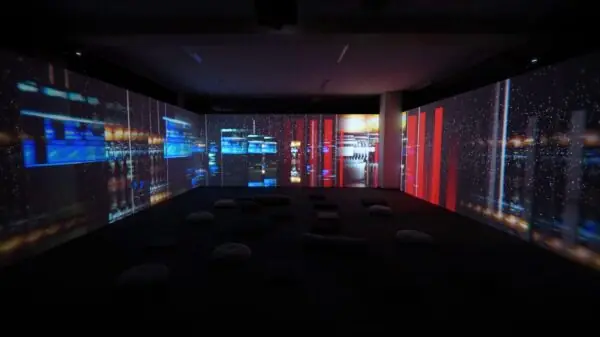
WOW participated in the signature pavilion “null²” at Expo 2025 Osaka, Kansai as part of the creator team, contributing to the planning, visuals, sound, and overall direction system. The pavilion’s theme is “Polishing Life.” WOW joined as a direction member from the earliest planning stages and, together with Expo producer Yoichi Ochiai, spent several years creating a wide range of creative elements, from the pavilion’s interior visuals, sound, robot control, and experiential flow to the exterior visuals. A Pulsating Sculpture, a Conversational Space For this pavilion, Ochiai established “two mirrors” as a key concept. The first refers to the sculpture itself, which generates unfamiliar landscapes. Its mirror-finished exterior absorbs the surrounding scenery, pulsating as it repeatedly transforms like a living organism, even as a building. The second refers to the experience inside the pavilion. In a space where mirrors and imagery are integrated, visitors confront “kigō*” and engage in dialogue with a digital human. WOW was primarily responsible for this interior experience. The space confronting “kigō” is a cube measuring 8 meters in width, depth, and height, with mirrored surfaces on all sides. Projection systems on the ceiling, floor, and walls, together with a vertical video object called the “Monolith” standing at the center, work in response to one another to depict “kigō,” creating endless reflections. In addition, the cube-shaped mirrored “goshintai,” which symbolizes the space, moves freely overhead, shifting perspectives and stirring the visitor’s mind and thoughts. Using mirrors as a medium, the experience moves back and forth between meaning and matter, self and other, reality and virtuality, encouraging visitors to reconsider and reinterpret what life is and offering a prompt to “polish life.” *Elements that constitute a person’s individuality, such as their name, hobbies, preferences, voice, and appearance Two Types of Experiences, Two Different Perspectives The experience is offered in two modes: “Dialogue Mode” and “Installation Mode.” Dialogue Mode centers on the world of “computational nature,” as proposed by Ochiai, and the story connected to it, allowing visitors to let go of their “kigō” through verbal communication. In Installation Mode, visitors view simple patterned visuals, along with the Monolith and goshintai moving throughout the space, from the outer corridor, creating a non-verbal experience that lets them intuitively sense the structures at the essence of life. In both experiences, the story, visuals, sound, goshintai, and Monolith are all intricately linked, so WOW worked closely with Ochiai to craft a precise direction. Direction Where Technology and Expression Merge On the technical side, to create a more three-dimensional and densely layered experience, WOW integrated a wide range of direction elements, including AI-generated real-time video, display of 3D Gaussian splatting, sound generation, image effects, as well as the display and speech of MirroredBodies created by visitors in a dedicated app, and robot control for the goshintai and Monolith. In collaboration with various companies, WOW developed the main system that aggregates and controls these elements. In addition, the carefully designed sound direction, which makes use of characteristics across different frequency ranges, contributed to a unique auditory experience. Logo Design and Design Guidelines That Create Organic Expression WOW also handled the logo design for null². For the dynamic logo, multiple fonts were used to create a design that transforms into various forms. The static logo was refined from the dynamic logo as the official version. In both cases, the aim was to maintain a certain degree of legibility while pursuing a fluid, life-like design tone through verification and rule setting. In this project, the participating teams, including WOW, brought together all of their technical capabilities and creativity to create the work “null²,” something that could only have been realized at the Expo.

Osaka-Kansai Expo 2025 “BLUE OCEAN DOME” - 映像作家: wow-inc
3DCGAudio visual performanceEventExperienceInstallation

Osaka-Kansai Expo 2025 “BLUE OCEAN DOME”

2025
00:00:53
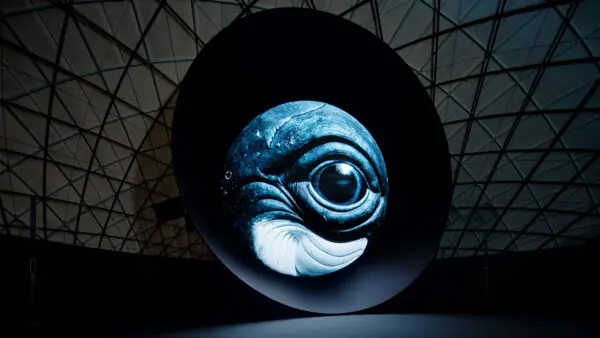
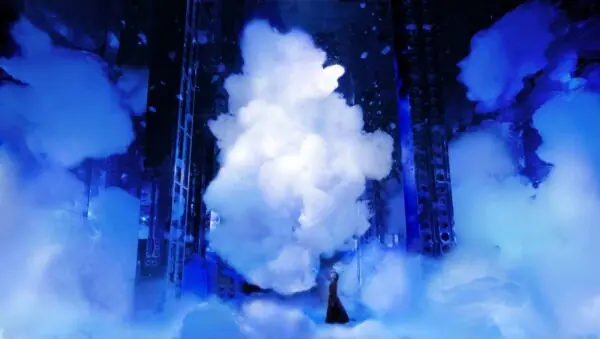
WOW participated in the BLUE OCEAN DOME at Expo 2025 Osaka, Kansai. At this pavilion, where visitors can learn about the sustainable use of marine resources and the protection of marine ecosystems, WOW was responsible for the direction and production of the video content. BLUE OCEAN DOME consists of three spaces under the theme of “the revival of the ocean.” It includes an installation expressing the spectrum of water, a video installation depicting the miracles and crises of Earth as the planet of water, and a space that presents a path toward restoring the ocean through documentary footage. WOW developed a hemispherical LED visual device about 10 meters in diameter together with Azlab. Through this one-of-a-kind, ultra-high-definition giant hemispherical LED screen, it brought Earth as seen from space to life. —The beautiful Earth, a miraculous water planet, is on the verge of being gravely damaged by human activity. This work depicts the ocean, where the brilliance of the chain of life and pollution progress simultaneously, across a range of scales from a vast view like looking at Earth from space to the cellular level. By fusing realistic depictions so true to life they could be mistaken for the real thing with dreamlike imagination, the piece sought to create an audiovisual experience as a “device for transforming consciousness” that appeals to the senses of visitors. The footage, supervised after fieldwork in biologically diverse marine areas and by the Japan Agency for Marine-Earth Science and Technology, vividly portrays everything from vibrant life to the realities of marine pollution through the meticulously crafted 3DCG for which WOW is known. In addition, Hatis Noit’s voice, resonating as if with the voices of all beings living in the sea, gave the imagery multidimensional depth. The hemispherical screen, covered by a parabolic cover, was precisely designed down to the number and arrangement of its supports, realizing two distortion-free curved surfaces. For the parabolic cover serving as the backdrop for the LED screen, a special paint that appears darker than black by absorbing light was used. A smooth base finish achieved through plasterwork and painstaking hand-applied painting created a jet-black screening space. The hemispherical screen itself was fabricated by hand, one small panel at a time. This ultra-high-definition display, with approximately 160,000 LED chips arranged at a 2.5 mm pitch, supported the overwhelming visual experience.
"Light’s Ancient Strata" Old Rice Warehouse Installation #Hino Town, Tottori Prefecture - 映像作家: overlay
Art workAudio visual performanceInstallation

"Light’s Ancient Strata" Old Rice Warehouse Installation #Hino Town, Tottori Prefecture

2025
00:05:43
This work, presented on August 13, 2025 at the “Neo Lantern Festival” held in Hino Town, Hino District, Tottori Prefecture, simultaneously unfolded a visual presentation and an illumination design that enveloped the entire space. Set in an old warehouse once used for storing rice, it repurposed a dormant space and transformed it into a place that connects local memory with the future. The illumination is not merely decorative; it is an essential element that shapes the rhythm of the space in response to the imagery. Light placed along the walls and beams overlaps with the abstract layers of the video, spreading outward as if embracing the audience’s bodily sense. In a space where the festival’s defining “light” and the installation’s illumination coexist, the traditional light of the festival and the light of contemporary digital art intersected. The theme of the work is “reconstructing the landscape.” It captures fragments of nature and daily life from the Hino District (Hino Town, Kofu Town, and Nichinan Town), then reassembles them into abstract designs. The video evokes memories of the landscape, while the illumination serves to extend those memories throughout the entire space. Viewers can experience the moment when the familiar appearance of the land is transformed by light and imagery, discovering another kind of beauty hidden within the region’s scenery. Underlying the work is a desire to reuse local resources and foster cultural regeneration. By reviving an unused rice warehouse as an art venue, it became an attempt to create new value that honors memories of the past while opening toward the future. The closed-off space of the warehouse was opened up, creating a place where local people could share an experience of being surrounded by light. This installation functions as a mediator that connects land, people, and memory through the unity of video, illumination, and the local community.

Sign up for unlimited access to the video archive