Movies

Direction
Production
Camera
Lighting
Art / Styling
Post Production
CG / Visual
Animation
Sound / Music
XR / Interactive
Artist
Technical / Engineering
Capper - Deep Sea (Official Music Video) - 映像作家: matheusvkatayama@gmail.com
Music videoMusic Visualization

Capper - Deep Sea (Official Music Video)

2024
00:03:51
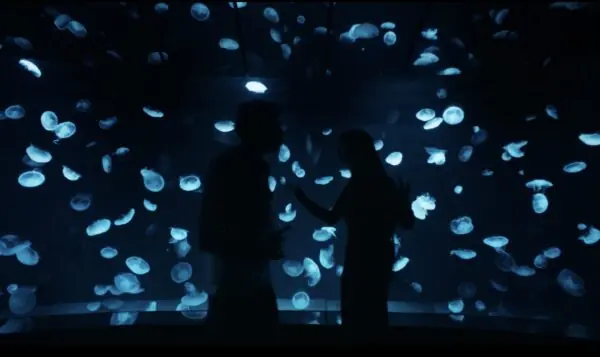
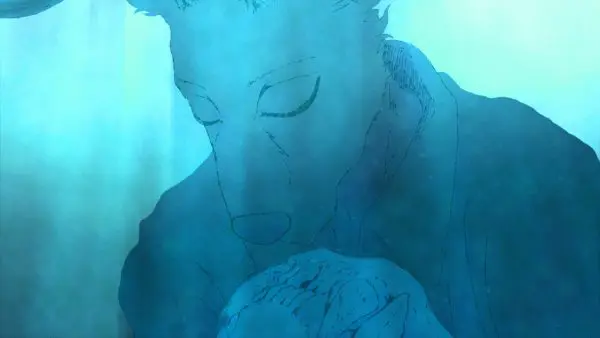
When I first heard this song, I felt my emotions scatter in every direction, as if confusion and calm were spreading through my chest at the same time. A faint hope within sorrow. A small flame flickering without fading, deep inside a frozen body. This work began by gently gathering those contradictory feelings, the fact that they simply “exist,” as a visual expression. This music video depicts an emotional journey that begins with a parting. How a heart that has experienced loss wavers, and eventually moves toward acceptance. That inner transformation is carefully woven together through color design, lighting, framing, and camera movement synchronized to the rhythm. A room submerged in water, an empty deep sea, a motorcycle racing through the city at night— all of it symbolizes the protagonist’s mental state and emerges as an inner landscape. For the lighting, rather than direct light, I deliberately used reflections and silhouettes to leave room for ambiguity instead of clear-cut “answers.” The camera work was designed to visualize the heart’s fluctuations, shifting like waves from stillness to motion, from tight to wide. As for the structure, I prioritized the flow of emotion over a conventional storyline, so that viewers could focus on simply “feeling” the piece. Scattered memories and thoughts overlap into a single mental landscape, and before long, quietly, they become a tear. That pool of water may perhaps be an ocean made of one’s own tears. I would be happy if this video could gently resonate somewhere with the “deep sea” that exists within each viewer.
Issei Uno Fifth – TEENAGE PROBLEM (Prod. by HYESUNG) (Official Music Video) - 映像作家: matheusvkatayama@gmail.com
Music videoMusic Visualization

Issei Uno Fifth – TEENAGE PROBLEM (Prod. by HYESUNG) (Official Music Video)

2025
00:03:52
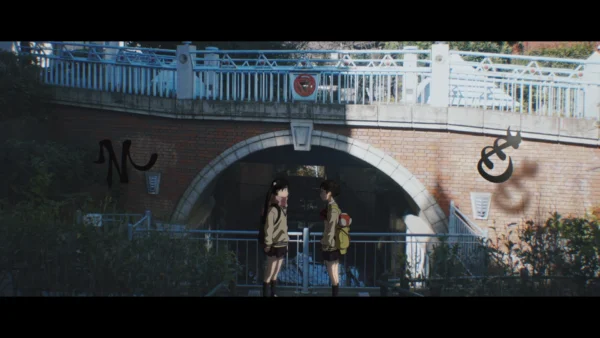
This video work is a poetic piece that portrays the two extremes of “pain” and “brilliance” swirling within a teenager’s heart. Its non-linear, fragmented narrative moves back and forth between reality and memory, as if wandering through the fault lines of recollection, depicting the lingering aftereffects of the protagonist Airu’s heartbreak and the faint light that remains within it. Current loneliness and the tenderness of the past. Shouts and silence, warmth and collapse. All of it layers itself within the rhythm of the visuals, creating a loop of emotion. The camera shakes in hand-held motion, following and capturing emotional turbulence in a physical way. The lighting uses cold blue and gray tones for the present, as if separating existence from memory, while the flashbacks are rendered in warm, slightly overexposed light. Neon glow, like sparks of emotion, occasionally washes over the frame. In the editing, the theme of “a chain of emotions that feels as if it might break, yet never quite does” is expressed through scattered match cuts, dissolves, and glitch-like moments, leaving room in the viewer’s heart. The film repeats rises and falls like a heartbeat, creating an emotional rhythm. This work is a visual poem that seeks to portray all the pain and love hidden behind a single word: “Y.O.U.” It is a visual monologue woven for someone’s emotions that have not yet become words, about self-destruction and rebirth, and how to love and how to lose. Straightforward, awkward, and therefore beautiful — it is a work that burns into image the essence of “teenage.”
showmore – liquid【Official Music Video】 - 映像作家: matheusvkatayama@gmail.com
Music videoMusic Visualization

showmore – liquid【Official Music Video】

2024
00:03:23
This video depicts “the quiet afterglow left behind after parting.” Two people who will never cross paths again. Yet only the threads of emotion remain, thinly and unmistakably, stretching across space. The man and woman never appear in the same frame; each simply stands still within their own world. A man smoking in a room, a woman sitting inside a car wrapped in rain. Time does not move, and there are no words, only emotion drifting there. At the core of this work is “repetition.” The phrase “just because,” repeated again and again in the lyrics. In response, the visuals also repeatedly show the same frames and actions. Exhaling smoke, gazing at the rain, a hand tapping the steering wheel. All of these are mental landscapes of characters trapped within an emotional “loop.” In the editing, by repeating the same moments, the work creates a sensation as if time were melting away. Even within the repetition, subtle changes—a slight shift in light, the timing of a breath, the tremble of a gaze—are woven in, quietly conveying to the viewer that emotion is not completely still. The lighting and camera work are also closely linked to the poetic tempo. Soft, diffused light, streetlights reflected in raindrops, shadows wavering in cigarette smoke. Everything expresses “things that are unclear, yet undeniably there.” Liquid is a visual poem that shines a light on the “ambiguity” of emotion and the things that cannot be put into words. Bittersweetness and release, stillness and suffocation—an audiovisual experience where all of these coexist, like being inside a dream. We aimed for an afterglow that gently touches the depths of the viewer’s memories and emotions.
Gacha Life - 映像作家: hayazaka@filmoq.co.jp
劇場映画

Gacha Life

2025
00:00:33
“Gacha Life” Available on the short drama app [FANY:D]. [Synopsis] Sachiko Yamanoura (27), who works in the HR department of an IT company, has spent her days with a string of the world’s worst luck—stepping on gum, catching her boyfriend cheating, and more—until she finally died in a ninth freak accident, without a second thought. But in the afterlife, “Gacha Life,” a salvation awaits: she can spin a gacha and choose her next-life partner. As one after another of the men appear—dependable superiors, dangerous entrepreneurs, vanished fiancés, and other anything-but-straightforward types—Sachiko faces her own “luck” and searches for what true happiness really is. A fresh kind of fantastical romantic comedy, woven together from a fantastical setting and comedic developments. Before long, Sachiko finds herself forced to “interview” a colorful cast of men, including an ex she wants to break up with, an influencer, and a missing fiancé. Are the choices really nothing but duds, or is there a winner in the mix? Who, in the end, will she choose as her “partner in the next life”—? [Project Concept] “Gacha Life” is a work that explores the fundamental question, “Is life determined by luck?” by intertwining black comedy with serious human drama. At the heart of the story is the journey of the protagonist, Sachiko Yamanoura, as she reexamines the choices in her life through a system of chance called “gacha.” At the foundation of the story lies the theme, “Can fate really be changed?” Sachiko has long believed that she is “unlucky,” but is her misfortune truly due to luck? Or have her own choices and actions been drawing those outcomes to her? This work poses such questions to the audience. [Direction Policy] For this work, I wanted to depict fantasy and real emotions in exquisite balance. By contrasting the realism of the world we know with the abstract afterlife world of “Gacha Life,” the story gains greater depth. Gacha Life (the afterlife) is designed as a simple, symbolic space, with visuals that allow the audience to intuitively understand, “What’s going to happen here?” By incorporating lighting and game-like UI (user interface) elements, we emphasize the feeling of “being made to choose one’s fate.” Depictions of the real world use handheld camerawork and natural lighting to create a realistic, intimate atmosphere. This emphasizes the tangible feel of Sachiko’s life and makes it easier for the audience to empathize with her choices. Balance of humor Not too serious, but not too light either. Since the very premise of “gacha” is humorous, the characters’ reactions are portrayed realistically. Rather than making the audience feel, “This is something that happens only in fiction,” we want them to think, “Maybe something like this could actually happen?”

Loading...

No more content

Error loading content

Loading...

No more content

Error loading content