NHK General "The Day of Resurrection: If You Could Meet the Dead" - 映像作家: whatever
3DCGTV

NHK General "The Day of Resurrection: If You Could Meet the Dead"

2019
Only Image
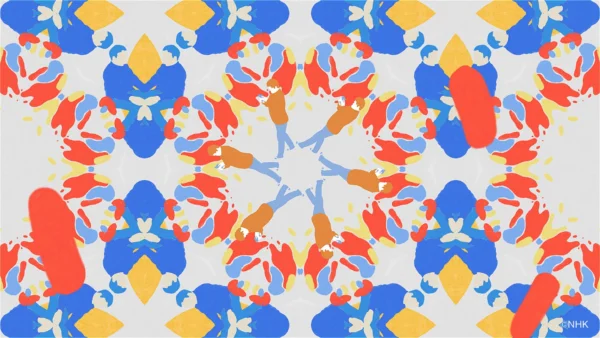
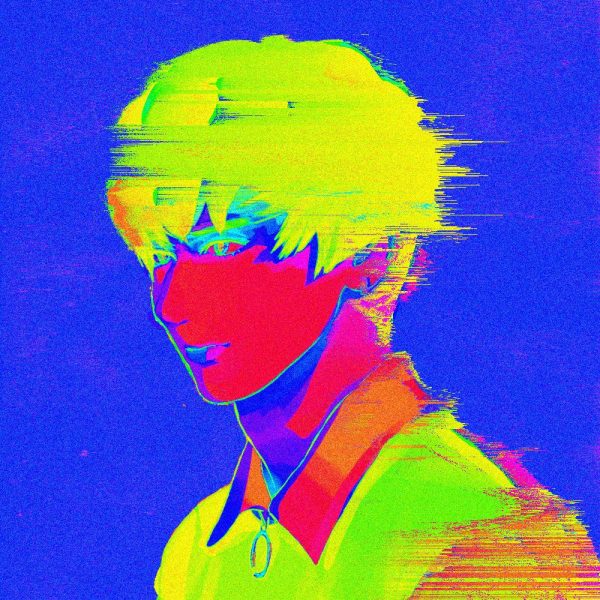
"Revival Day" is a program that gives people the chance to reunite, just once more, with someone who is no longer in this world. In the program, the reunion between Tetsuro Degawa and his biological mother, who passed away eight years ago, is recreated. Whatever was responsible for planning and technical direction, art direction, and the production of the making-of movie "Behind the scene." ーーー [Creator's Comment] What I paid the most attention to on the art direction side was keeping television-style direction to a minimum, so that viewers could focus on the conversation between Degawa and his mother, Yasuko. For that reason, I proposed an extremely simple set design consisting of only chairs and a monitor. On the technology side, the biggest challenge was the complete lack of reference photos and footage. A few low-resolution printed photos, and a lucky find: about 15 seconds of footage of Degawa and Yasuko appearing together for the only time. There was almost no audio data. Under those circumstances, recreating a person from the past with CG was an extremely difficult task. The CG production process used Autodesk Maya for modeling; VICON + Faceware + IGS + MotionBuilder were integrated and rendered in Unreal Engine; grading was done in DaVinci Resolve + MISTIKA; and compositing was done in Nuke. However, unlike ordinary CG production work, we repeatedly made small adjustments while tracing the family's memories and checked them over and over, gradually bringing Yasuko closer to life. Degawa's brothers and sisters helped us an extraordinary number of times. I would like to take this opportunity to express my sincere gratitude to them. Whatever Producer Yusuke Tominaga
Osaka-Kansai Expo 2025 “BLUE OCEAN DOME” - 映像作家: wow-inc
3DCGAudio visual performanceEventExperienceInstallation

Osaka-Kansai Expo 2025 “BLUE OCEAN DOME”

2025
00:00:53
WOW participated in the BLUE OCEAN DOME at Expo 2025 Osaka, Kansai. At this pavilion, where visitors can learn about the sustainable use of marine resources and the protection of marine ecosystems, WOW was responsible for the direction and production of the video content. BLUE OCEAN DOME consists of three spaces under the theme of “the revival of the ocean.” It includes an installation expressing the spectrum of water, a video installation depicting the miracles and crises of Earth as the planet of water, and a space that presents a path toward restoring the ocean through documentary footage. WOW developed a hemispherical LED visual device about 10 meters in diameter together with Azlab. Through this one-of-a-kind, ultra-high-definition giant hemispherical LED screen, it brought Earth as seen from space to life. —The beautiful Earth, a miraculous water planet, is on the verge of being gravely damaged by human activity. This work depicts the ocean, where the brilliance of the chain of life and pollution progress simultaneously, across a range of scales from a vast view like looking at Earth from space to the cellular level. By fusing realistic depictions so true to life they could be mistaken for the real thing with dreamlike imagination, the piece sought to create an audiovisual experience as a “device for transforming consciousness” that appeals to the senses of visitors. The footage, supervised after fieldwork in biologically diverse marine areas and by the Japan Agency for Marine-Earth Science and Technology, vividly portrays everything from vibrant life to the realities of marine pollution through the meticulously crafted 3DCG for which WOW is known. In addition, Hatis Noit’s voice, resonating as if with the voices of all beings living in the sea, gave the imagery multidimensional depth. The hemispherical screen, covered by a parabolic cover, was precisely designed down to the number and arrangement of its supports, realizing two distortion-free curved surfaces. For the parabolic cover serving as the backdrop for the LED screen, a special paint that appears darker than black by absorbing light was used. A smooth base finish achieved through plasterwork and painstaking hand-applied painting created a jet-black screening space. The hemispherical screen itself was fabricated by hand, one small panel at a time. This ultra-high-definition display, with approximately 160,000 LED chips arranged at a 2.5 mm pitch, supported the overwhelming visual experience.

Loading...

No more content

Error loading content