Movies

Direction
Production
Camera
Lighting
Art / Styling
Post Production
CG / Visual
Animation
Sound / Music
XR / Interactive
Artist
Technical / Engineering
Oni and Yanari House Rattler - 映像作家: Shinobu_Soejima
AnimationLive actionShort filmStopmotion

Oni and Yanari House Rattler

2018 ~, 2019
00:06:27
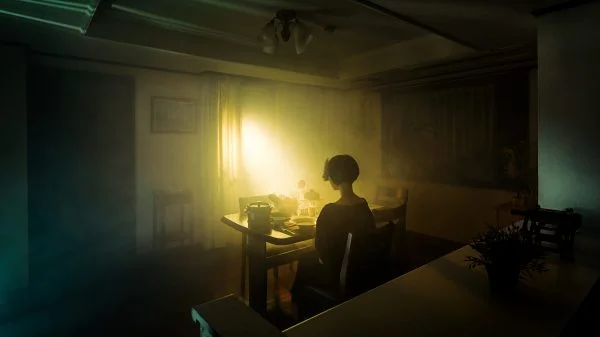
For a long time, every house in this country was inhabited by the yokai known as Yanari, or “house-rattlers.” But as wooden houses gradually fell into decline, they came to be inhabited only by the hard of hearing elderly, and the voices of the house-rattlers could no longer be heard. The house-rattlers sometimes feel lonely about that. The protagonist of this work is a small yokai, only a few inches tall, called “Yanari,” which appears in Japanese folklore. It has long been believed that the strange creaking and other mysterious sounds sometimes heard inside houses are the work of these beings, who try to startle the residents. In Japan, people have long believed that the homes they live in, like the house-rattlers, contain unseen shadowy aspects, and they have feared them, calling them “oni” and treating them as something distant from everyday life. Today, this culture is fading, and the residents who once sensed “oni” have grown old, as if living on the side of the oni as shadows of modern, bright society. This work is a video piece that depicts the figures of elderly people being left behind by contemporary society and creatures from folklore, using effects of shadow and light. This is an animated work shot by physically moving dolls on location in my grandmother’s 80-year-old house in a depopulated port town. That house had long accepted and seen off many residents over its 80-year history, and because it still bore traces of the lives they had lived there, I always felt the presence of something “uncanny” whenever I heard a house-rattler in the house, and as a child I was always afraid. In this work, faint natural light, shadows, and the contrast of light and dark shining through the transom were used to create effective boundaries between bright and dark areas inside a Japanese house. I attempted to recreate the folklore creature moving between light and shadow using actual dolls, making it seem as if it truly existed. By filming the dolls at their actual size as the scale of “Yanari,” I aimed to blend our everyday world with the world of animation, and to visualize the eerie presence lurking within the Japanese house.

Mood Hall -side B- | Mood Hall [side B] - 映像作家: kawaiokamura
3DCGAnimationArt workExperimental filmOriginalShort film

Mood Hall -side B- | Mood Hall [side B]

2022
00:33:34
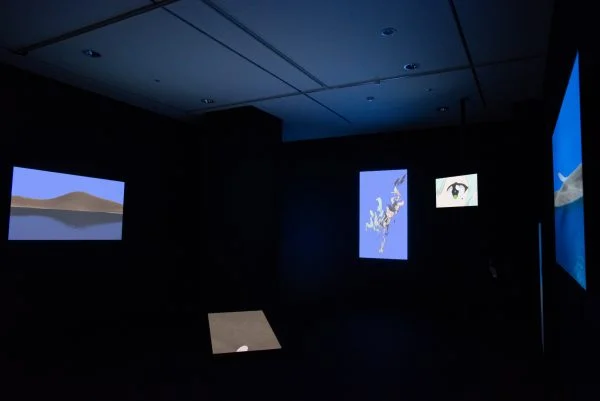
“33 minutes and 33 seconds needed before the world ends” A dying Earth. A strange game played by the survivors: “Mood Hall.” A mysterious middle-aged gentleman and a beautiful woman, appearing and disappearing. Little people. Giants. A party. A desert. The bottom of a pool. Dance. Day and night, repeated again and again. Experimental, artistic, adventurous, half sci-fi, half mystery: a densely layered labyrinthine world made of sketches. A masterpiece of film that strips away words and leads you into a world of seeing and hearing alone! ・・・・・・・・・・・・・・・・・・・・・・・・・・・・・・・・ In 2016, “Mood Hall” was presented as the latest installation in Kawaiokamura’s retrospective exhibition. It was Kawaiokamura’s first new work in nine years, with sound direction for the entire solo show handled by Mariko Harada. In 2019, “Mood Hall” was completed as a film work, and in 2020 it was released theatrically at Demachiza, a cinema in Kyoto. The music, of course, was by Mariko Harada. It brought the richly layered 33-minute-and-33-second world of image and sound to the screens and speakers of the movie theater. In 2022, the music for “Mood Hall” was completely rewritten by Kazumichi Komatsu. It was made neither as an installation nor for a cinema, but as a composition intended for streaming. Reading the visuals like a score, he struck the sound against the images so powerfully that they changed, and linked each segment through a distinctive sense of floating weightlessness. Reconstructed through Komatsu’s bold interpretation, “Mood Hall” was named “Mood Hall side B.”

Loading...

No more content

Error loading content

Loading...

No more content

Error loading content