映像作家100人2019

※並び順はランダムです

Satoko Shibata "Namida" (Official Video) - 映像作家: shotasakamoto
2D animationMusic video

Satoko Shibata "Namida" (Official Video)

2019
00:04:22
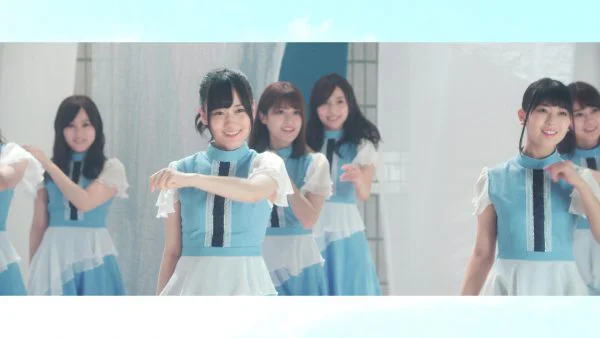
The MV for Satoko Shibata’s “Koukai,” which I got to shoot earlier, has become a new signature work of mine as well. At first I was congratulating myself, thinking, “Man, I’m such a genius to have shot something this amazing!” But the more I thought about it, the more I realized that what makes this video great is simply that Ms. Shibata is such an incredible artist; it’s not that I’m the amazing one lol... (sweat) I think Ms. Shibata is incredible. She’s not ordinary. Not just the song, but especially the lyrics are truly amazing. You can really come to understand the beauty of poetry as an art form. So, about this video: my impression of Ms. Shibata is that she’s basically quite natural and down-to-earth, but since she’s just plain (pardon me) beautiful and cute, I wanted to bring that out to the fullest. So I asked other people to do the hair, makeup, and costume, and said, “Make her look like Twice’s Nayeon!!” That’s how we shot it. (I was amused to see someone in the YouTube comments who had clocked the Nayeon reference for Shibata-san.) The flowers and jewels in the background were drawn by several people. Yamada Minori is a young animation artist I discovered on Twitter; her profile said she graduated from Tama Art University, so I asked her to do it, and as expected, she was absurdly good and I was seriously blown away. Her usual style doesn’t seem to be all about flashy technical skill, but art school grads really do have such strong foundational drawing ability... This kind of skill really felt like something you’d put in a frame (?), and placing it right next to Shibata-san’s face made the drawing even more effective at highlighting her beauty. Other artwork was also drawn by Hiroro Sato and my wife, Chiaki Sakamoto, and their pieces had a nice, distinctive flavor too. Since it’s a collage, the balance is fun.
Mimicry's Little Room - 映像作家: annolab
3DCGArt workInstallationInteractive

Mimicry's Little Room

2019
00:01:11
Commissioned to create an installation for the masterpiece Alice in Wonderland, I wanted to create a space where visitors could feel as if they had entered the mysterious world within the story. The various unbelievable events Alice experiences are wondrous, but at the same time they are filled with the intellectual curiosity and excitement we felt as children—thoughts like “Wouldn’t it be great if this happened?” and “What if this happened?” For the installation, we wrote down countless “wouldn’t it be great if...” ideas and exchanged many proposals, and in the end we decided on the concept of John Tenniel’s beautiful illustrations coming to life and moving in response to the viewer. The small 2.5-meter-square room was designed as a “special place for connecting with Alice’s world.” Inside the 14 frames hanging on the walls are iPads, each displaying a character from Alice’s story. Based on John Tenniel’s original illustrations, 3D model data was created for the characters, and through shader programming, real-time image processing makes them look like paintings drawn with hatching techniques, so at first glance they appear to be ordinary framed artworks. When a person stands on the carpet in the center of the room, a Kinect v2 sensor detects their pose, and all the characters in the frames slowly begin to move and “mimic” the person’s stance. The playfulness that fills Alice’s world contains many suggestions for the way we live and work today. Dutch historian Johan Huizinga argued that “play” is the essence of human activity and the source from which culture arises. French philosopher Roger Caillois developed this view of humanity, identifying mimicry, meaning “imitation,” as one of the four fundamental elements of play, and noting that it played a particularly important role in primitive societies. In addition, in Mozart, Hideo Kobayashi points out that Mozart was a genius of imitation, and that his original music was born out of imitation. We can discover many things through play and develop culture. We created this work in the hope that many people, through the story of Alice and this exhibition, would feel the importance of filling everyday life with more play.

Loading...

No more content

Error loading content