Movies

Direction
Production
Camera
Lighting
Art / Styling
Post Production
CG / Visual
Animation
Sound / Music
XR / Interactive
Artist
Technical / Engineering
[Self-Produced Anime MV] Living in a World Without Magic - 映像作家: akiwashi
2D animationAnimationMusic videoOriginalShort film

[Self-Produced Anime MV] Living in a World Without Magic

2021 ~, 2022
00:07:17
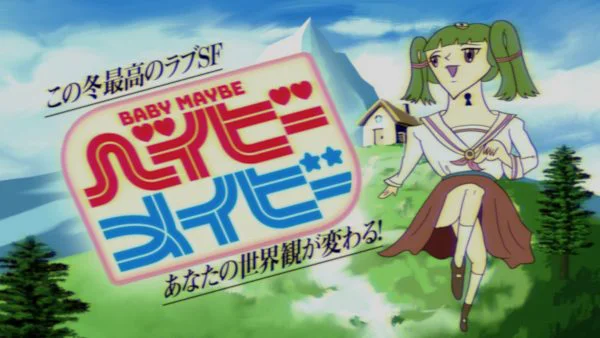
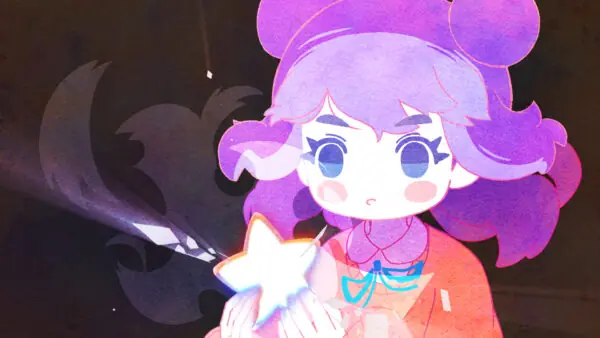
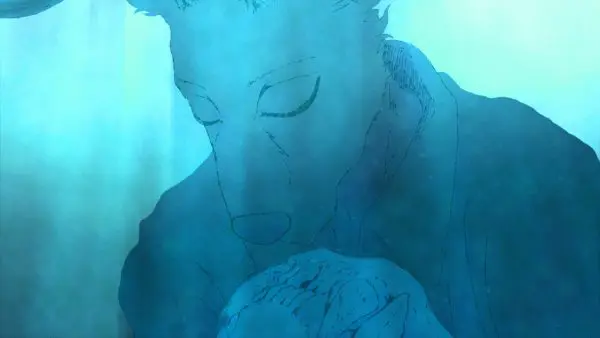
Graduation project work. Production began around January 2021; the trailer was posted on YouTube on May 14, 2022, and the full version (about 7 minutes) on July 1. During my third year of university, I was almost constantly drawing MV illustrations for HoneyWorks. When I told Gom, the leader, “In my fourth year, I won’t be able to take on work because I’ll be focusing on my graduation project,” he said, “Then let’s make something together,” and asked me to handle the music side. That led to the launch of the creator team “Euluca Lab.” with the graduation project as its first work. I never expected to have a song produced for me — especially by HoneyWorks — so at first I had no idea of making an MV. Since my third year of high school, I had always planned to make a roughly five-minute animated story for my university graduation project, and I had kept that idea until I consulted Gom. Because of that, when it came time to make an MV, I couldn’t bring myself to create something with weak storytelling, so I decided to make the story just as important as the visuals. Even though it is an MV, I wanted the story to be depicted as clearly as possible. To do that, I had to convey almost the entire video without dialogue. What had originally been planned to be around four minutes ended up becoming seven before I knew it. Including cuts used only in the trailer, I produced about 140 cuts in total, handling everything myself: story development, storyboards, animation, backgrounds, 3DCG, compositing, and more. I also participated in lyric writing, added sound effects, and wrote the dialogue. I had mostly only drawn illustrations, so I didn’t have much experience with video production, and there was no one I could ask about how to make things. When thinking up the story, I first imagined the scene’s visuals and how it would be produced in my head, and prioritized whether I could actually make it myself. When I had a specific idea, like wanting to have glowing butterflies flying in 3D, I would research how to make it and judge whether it was feasible. I had never touched 3D before, but I managed to learn the basics and simple operations. As for drawing, I had only played around with Ugo Memo 3DS in junior high school, but I gradually became able to draw somewhat better, and my overall drawing ability improved quite a lot. During the year and a half of production, I sacrificed everything: play, socializing, and a normal human life. Wanting to avoid any regrets over my once-in-a-lifetime graduation project, I pushed myself to my limits. As a result, I came to think, “I worked hard because it was a once-in-a-lifetime thing, but I never want to make anime alone again.” In the future, I don’t plan to make an animation longer than 20 seconds by myself anymore. If I were to do something like directing or storyboard direction, I think I would also need to study how commercial anime is made. With the cooperation of people one would never expect for what was just a university graduation project, the quality of the music and character voices rose to a level that was hard to believe, and I felt a lot of pressure. That probably made things even more painful, but without that pressure, I think I would have settled for less in some parts. Of course, looking at it now, there are things I think could have been done better, but I gave it everything I had at the time. Because I hadn’t really worked hard for entrance exams or club activities, this became the first thing in my life I could say I truly “worked hard” on, and it became an important work to me. However, this is only the first work of Euluca Lab., so I think that someday I’ll need to create something even greater that I can say I worked harder on than this. Software used Animation, backgrounds, compositing: CLIPSTUDIO EX Background processing: Photoshop Compositing: After Effects 3DCG: Blender Editing: Premiere Pro *This is the full version of the work, but I think you may enjoy it even more if you watch the trailer before viewing it (or even after). Trailer https://youtu.be/SFhDPB74fK0
Akiyama Kiro’s “Sonic Move” - 映像作家: shotasakamoto
3DCGMusic video

Akiyama Kiro’s “Sonic Move”

2024
00:04:04
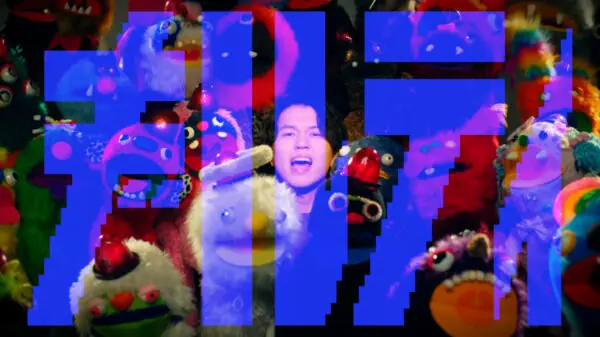
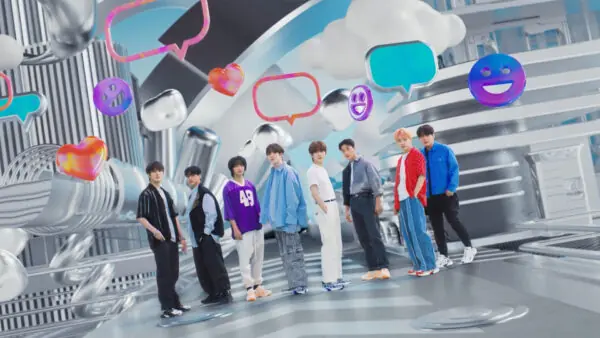
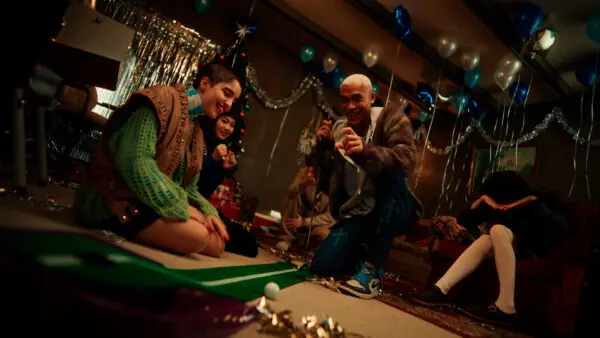
This is the MV for Akiyama Kiiro, a male solo musician, and it had been a while since I’d done a boys’ MV, so I wondered if I’d be okay—but in terms of the song style and the content, I really felt it matched me perfectly. When I first got an email asking if they could put me forward as a director candidate, I still only knew the song title, but just seeing the word “Sonic Move” made me imagine almost exactly what the current concept would be. So I was like, “Please let me do this!” For lighting, it was Hirai from Office Doing, who I’ve worked with for a long time. Hirai is honestly such a great person, absolutely the best. He’s helped me so much since the days when I didn’t know left from right, and I’m always insanely grateful. And for the camera, I did it myself. There’s the saying “use a specialist for each job,” so part of me always wants to leave shooting to a cinematographer, but with green-screen work, it’s not an ordinary shoot, so if you don’t shoot with editing in mind, it’s basically meaningless. Lately I’ve also been vaguely thinking it might actually be faster to do it myself, so this time I shot it myself. There was only one subject, and I wasn’t planning to do any camera movement anyway. Still, I really want to get over this whole “I want to do everything myself” thing... I rented an FX6 because I wanted to try it, but it was so ridiculously pro-level that I had no idea how to use it and it was difficult, and with my level of understanding there was no way I wouldn’t totally bomb the shoot, so I didn’t even bring it. In the end I shot with my usual a7s3, and honestly it’s the best—easy to use, beautifully clean footage, absolute strongest. Love it. I recorded in ALL-Intra. Compared with H.265, editing is like ten times lighter, and when I was editing an MV shot in H.265 before, the accumulated edits toward the end made it so heavy that AE stopped working and I couldn’t even render it, which was way too dangerous, so ALL-Intra is definitely the way to go. With ALL-Intra, even if the edit gets heavy toward the end, it barely holds up. You need V90 SD cards and the files are big, but well, that’s a tiny trade-off. You can always convert only the parts you need to ProRes, but I end up doing all kinds of things all the way through anyway. So I shot a bunch of things, even rented a stunt bike for the motorcycle scenes, and wrapped the shoot smoothly. For offline editing, I had director Kotaro Saito, whom I often ask, do it, and although he polished it into a nice shape, editing with only green-screen material and no clues in the background is still hard, isn’t it... sorry... So from there I tweaked it a lot, big and small, to match my own tempo and sense of timing, and it was fun. For the CG too, the background for the motorcycle scene was made by a creator named Ai Ikeda, and it was amazing. The other scenes—the game center and the cityscape—were made by me. But you know, unlike the idol groups I usually work with, there’s only one person, so it’s just so much easier. Having that kind of freedom to make it interesting is the best. I could have done camera movement and tracking to get that realistic coolness, but since the subject was just one person, I decided to shoot it fixed and then do the camera work in CG afterward. From an editing standpoint too, this was overwhelmingly faster. Removing tracking markers takes several steps, and tracking itself takes time. With a short deadline, I didn’t want to spend time on that. If you think about shots where camera movement really matters, honestly up to around a trio, fixed shots might be fine. Well, it depends on the deadline. Anyway, since this time too the deadline was one of those classic major-label-short-turnaround situations, I shot with a shot list and system that anticipated the later editing schedule. In the end, I barely used any footage with actual camera movement, and almost everything was shot fixed and then moved afterward. By the way, from shooting to deadline it was less than 20 days, so for me it was cutting it pretty close. Since there was no time, I was making a bunch of things in parallel, and I didn’t have time to refine this and that, so I kept spreading out predictions—using instinct and experience to anticipate “if I do this, it’ll probably turn out like that”—and I made it with almost no detailed checking until the end. Still, I’m glad I was able to really push it right up to the very last moment. It’s really great work when making it is fun. Thank you very much. But in the end, the best part was that before making this, I had bought and studied a course on coloso by director/VFX artist Reo Wakui, and that was seriously, insanely useful. I’d been making green-screen videos for ages, and I was like, “Wait, I had no idea how to pull greens or handle masks at all this whole time!?” Thanks to that course, keying became much easier all at once, and as a result, even with color work—which I’d always been bad at—I’m not good yet at all, but I got to the point where it feels like if I study a bit more, I might actually be able to do it well. Things like linear workflows and ACES are apparently standard now, and I really would never have known that if I hadn’t bought this course, so I’m glad I studied... Also, I really think if I understand lighting and color correction, I’ll be the strongest. I’ve gotten this far just working alone by instinct with no knowledge at all, so if I study, I’d be way too powerful, right? My potential is insane. I also want to understand CG. I seriously don’t get it. I’m always making things by feel, just feeling my way through... Oh, and after this was released, I was ego-searching and found out that the drummer on this track was Hiroshi Kido, someone I’d met a few times in Kyoto when I was around 20. We were almost the same age, and back then I was also in a band and pretending to be a drummer, but Hiroshi suddenly appeared in the local live-house scene around that time as an absolutely incredible drummer. I thought, wow, amazing—and soon after, he became the drummer for Kenichi Asai’s band and turned pro. As for me, I kept smoldering away for several years, living a trashy life, the band broke up, I quit music, and now I’m where I am today through video work, which I started as a hobby. I doubt he remembers me, but it was nostalgic and somehow made me happy. So this is one way people can meet again, huh.
femme fatale “Daisikyu Daisuki” Music Video - 映像作家: shotasakamoto
2D animation3DCGAnimationMusic video

femme fatale “Daisikyu Daisuki” Music Video

2022
00:03:35
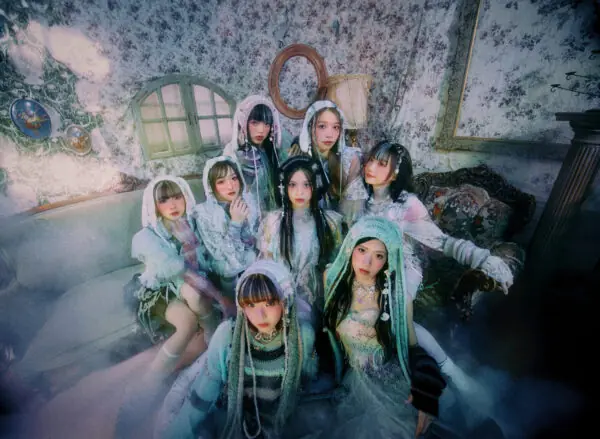
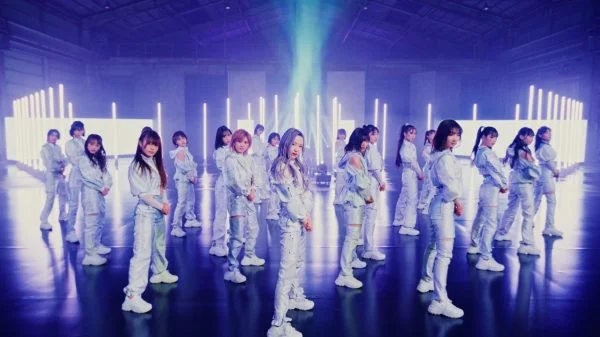
I just absolutely love the song! The moment I heard it, colorful candies started spinning around in my head. Since it’s “daishikyuu,” I wanted to make something fast-paced, chaotic, and above all super cute, so we had lots of costumes prepared, along with a bike, props, and all kinds of things for the shoot. With the theme of dreams you see while sleeping, I imagined a story like this: you desperately need to wake up, but you can’t get out of the dream world and end up going on a wild rampage! Also, I planned it with an image of a struggle over who has dominion over the dream—whether it’s Kana-chan’s dream or Sakina-chan’s dream, whose dream is it, anyway!? In the end, the domination battle element was removed, and it was shaped into more of a dream world, a cute little space, and that sort of image... When I listen to the song, it gives me the image of the two of them playing sports, and I pictured them wearing baseball uniforms in a gyaru style. I thought it would be absolutely adorable, so we went with it. (Kind of like Ayaya’s “Tropica~l Koi Shite~ru” lol) I also pushed for us to film the bike scene. When you think of speed, you think of a bike. The animation is also gorgeous, and for the very first OP animation, I asked misa to create something based on the idea that it takes place inside a girl’s dream. It’s insanely cute and amazing. The animation for the first chorus is the scene where they blow away the nightmare, and that was created by RaParu-san. I’ve loved RaParu-san for a long time and always hoped we’d get to work together someday... so I was really happy that my wish finally came true. And for the flashy effect animation in the baseball scene, of course it had to be Tetsuya Tatamiya-kun, the reliable go-to for effect animation!
Part of "Spring, Summer, Autumn, Winter - Flowers in Season" - 映像作家: saekoehara
Art workGenerative ArtInstallationSignage

Part of "Spring, Summer, Autumn, Winter - Flowers in Season"

2024
00:06:53
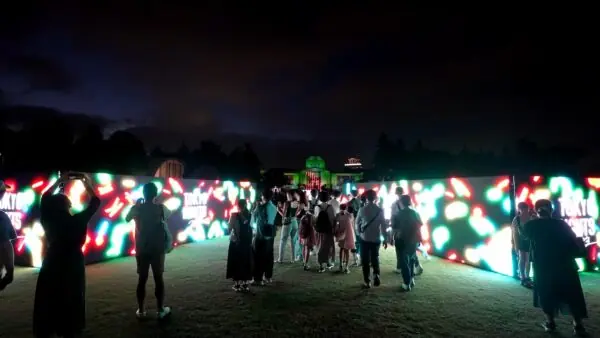
I was born and raised in Tokyo. In “Spring, Summer, Autumn, Winter,” I express the changing seasons by combining AI and generative art, focusing on flowers that are familiar in everyday life, under the theme of flowers in the city and flowers in memory. The reason I chose flowers as a motif is that I felt there is a commonality between flowers and digital signage, which is the exhibition format of “Poems in Code — The Present of Generative Art / Moving Images Generated by Programming.” When you go to the center of Tokyo, there are eye-catching signs everywhere, and even waiting for a traffic light can feel like it passes very quickly. In daily life, when walking outside, it becomes a habit to focus on “getting to one’s destination,” and we end up forgetting to walk while noticing the changing seasons. Flowers that color the seasons are very colorful and beautiful, much like the signage in the city. However, I think we rarely take the time to observe those flowers closely or stop to look up their names. Likewise, we also do not often stop and carefully look at what is written on or displayed by signage. In this sense, I felt that flowers in the city and digital signage have something in common. All of the 3D flowers in the work are created by first generating 2D images with generative AI, then measuring their depth using AI functions and converting them into three-dimensional forms. The images are generated to resemble real flowers as closely as possible. Generative AI is good at capturing the characteristics of what it creates, but it is not perfect. By comparing them with real flowers, observing the differences, and recognizing flowers anew, I chose realistic images in the hope that they could link with the viewer’s memory and sensations. In addition, the AI-generated videos in the work use images of seasonal flowers created with generative AI. By re-outputting them as video, the shapes and colors of the flowers harmonize and begin to look like new flowers, becoming nameless flowers. I felt this process was close to how flowers are recognized in memory, so I incorporated this expression. Flowers in the city may exist in our memories as something vague and blurry, like AI-generated video. I created “Spring, Summer, Autumn, Winter” with the hope that even in busy times, there can be moments to stop and enjoy the present.

Loading...

No more content

Error loading content

Loading...

No more content

Error loading content