関根慶明

関根慶明

unverified
Category
Cinematographer (DoP)
Status

Is this you?

Claim your profile for free — edit your bio, works, and contact info.

Claim this profile

Work

The Ravens / Paradise Rhapsody Music Video - 映像作家: kazukigotanda
AnimationMusic video

The Ravens / Paradise Rhapsody Music Video

2022
00:03:51
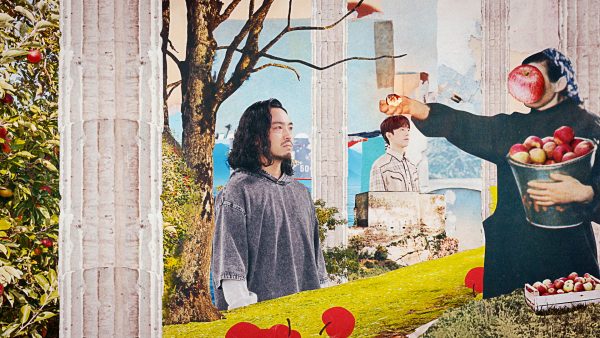
Theme set as “music as an asylum (sanctuary / free domain).” The staff notation in the lyrics (music) was interpreted as an asylum, a free domain. In the lyrics, music itself is called upon as something whose inherent joy one is made to notice, and it is sung that surrendering oneself to it is an ordinary, insignificant act. It also sounded like an antithesis to the recent situation (the COVID-19 pandemic), which can even create the illusion that there are restrictions on enjoying music. But in reality, there are no such restrictions on music itself. For both its creators and its listeners, it has always been free, inviolable, a sanctuary, and sometimes a refuge. Within that, the aim was to express through collage and an allegorical story the process of simply enjoying music with curiosity. “An asylum, or asylum (German: Asyl, French: asile, English: asylum), is a historical and social concept referring to a special area also called a ‘sanctuary,’ ‘free domain,’ ‘refuge,’ or ‘place without ties.’ Its etymology lies in the Greek word ‘ἄσυλον’ (meaning a place that cannot be violated, a sacred place). In concrete terms, it generally refers to an area beyond the reach of governing power.” - Wikipedia “A place where criminals, slaves, and others flee to escape severe harm or retaliation and receive protection. The term derives from the Greek asylos (unharmed, inviolable, sacred). In premodern times, before the state’s power to punish had been organized and systematized, it was a制度 seen in most societies. Originally, this system was based on a primitive religious belief that harming (taking revenge on) someone who had entered a sanctuary was a blasphemy against the gods. In ancient Greece, temples were regarded as places of protection for abused slaves, criminals, and debtors, and it was considered a religious offense to retrieve or punish those who had fled to a temple and come under divine protection.” - Kotobank What I focused on in this work was not only using live-action cuts, but also frequently cutting by motif in order to blur the boundaries of the domain.

Creepy Nuts / Daten Music Video - 映像作家: kazukigotanda
AnimationArt workMusic video

Creepy Nuts / Daten Music Video

2022
00:02:50
The aim was to create a direction that reverses the seemingly negative image of meeting through mistakes and presents it in a pop and positive way. Mistakes and errors are something everyone makes in life, and whether a judgment made at the time is right or wrong depends on the surrounding circumstances and the timing. In reality, when something happens, there is a time lag before you can take it in and make sense of it. In the midst of that, people often go through situations that seem inexplicable and cannot be clearly judged as right or wrong. By rolling along and falling like that, we directly expressed the image of “this is life, and yet there is something compelling about it, and it’s not all bad,” in sync with the lyrics. Being unable to resist and getting totally absorbed in something is neither justice nor evil, but a helplessly human side of us; it can be a mistake, or it can be desire. From there, the first image that came to mind was “missing an aerial trick in a circus.” Also, since a circus is on tour, I had a slight image in mind of messy romantic entanglements developing among the performers during that time. Also, in terms of falling from heaven to earth, and because this was pop music x hip-hop, the first things that came to mind were Wenders’ Wings of Desire and American pop art, so I referenced those. The quotation of Edward Hopper’s Nighthawks comes not only from the fact that the title is Night Owls (this work is the theme song for the TV anime Yofukashi no Uta), but also because it is frequently quoted in Wenders’ works. I also referenced the image of pop-art-style silkscreen prints and the imagery of Romare Bearden. In addition, when considering Creepy Nuts, I was mindful of their broad appeal, especially their exposure on variety shows, so the roulette was inspired by Jungle TV Tamori no Hōsoku, and the confession scene was inspired by Ore-tachi Hyokin-zoku.